The Mercedes G500: History and Specs
The Mercedes-Benz G500 is where the G-Wagon truly became a luxury item. It arrived as Mercedes made a deliberate decision, in 1990, to take the same ladder-frame platform that had spent a decade in service with militaries and emergency services, and rebuild it into something that could sit alongside the S-Class in the showroom. The G500 was the fullest expression of that decision.
The W463: Where the Luxury G-Wagon Begins
To understand the G500, you have to understand what the W463 was designed to do. The original G-Wagon, the W460, launched in 1979 as a genuine utility vehicle. It was spartan, functional, and built for terrain rather than comfort. By the mid-1980s, Mercedes recognised that its customers wanted more, but changing the platform too aggressively would have destroyed the very qualities that made it compelling. The solution was a new chassis designation.
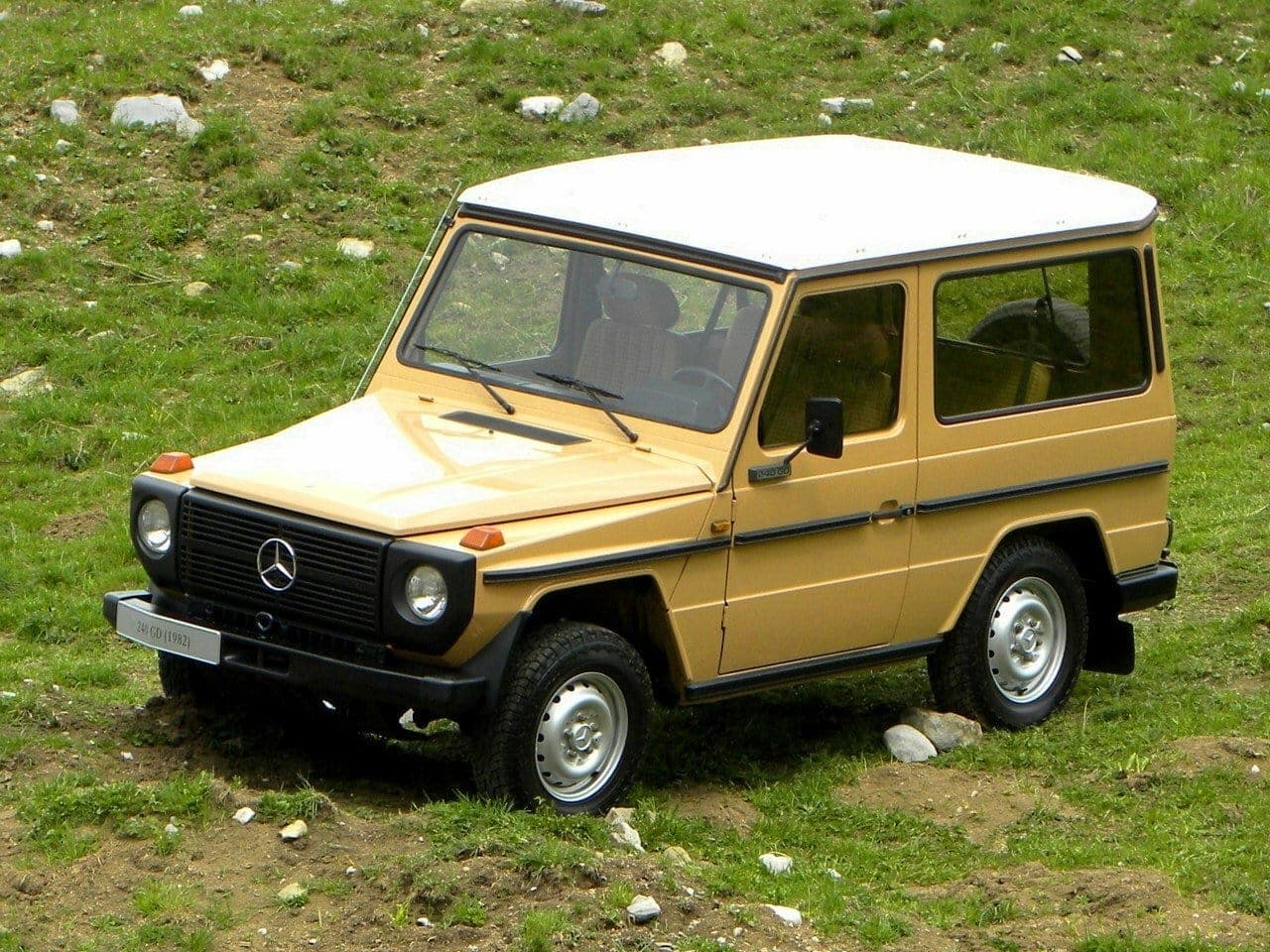
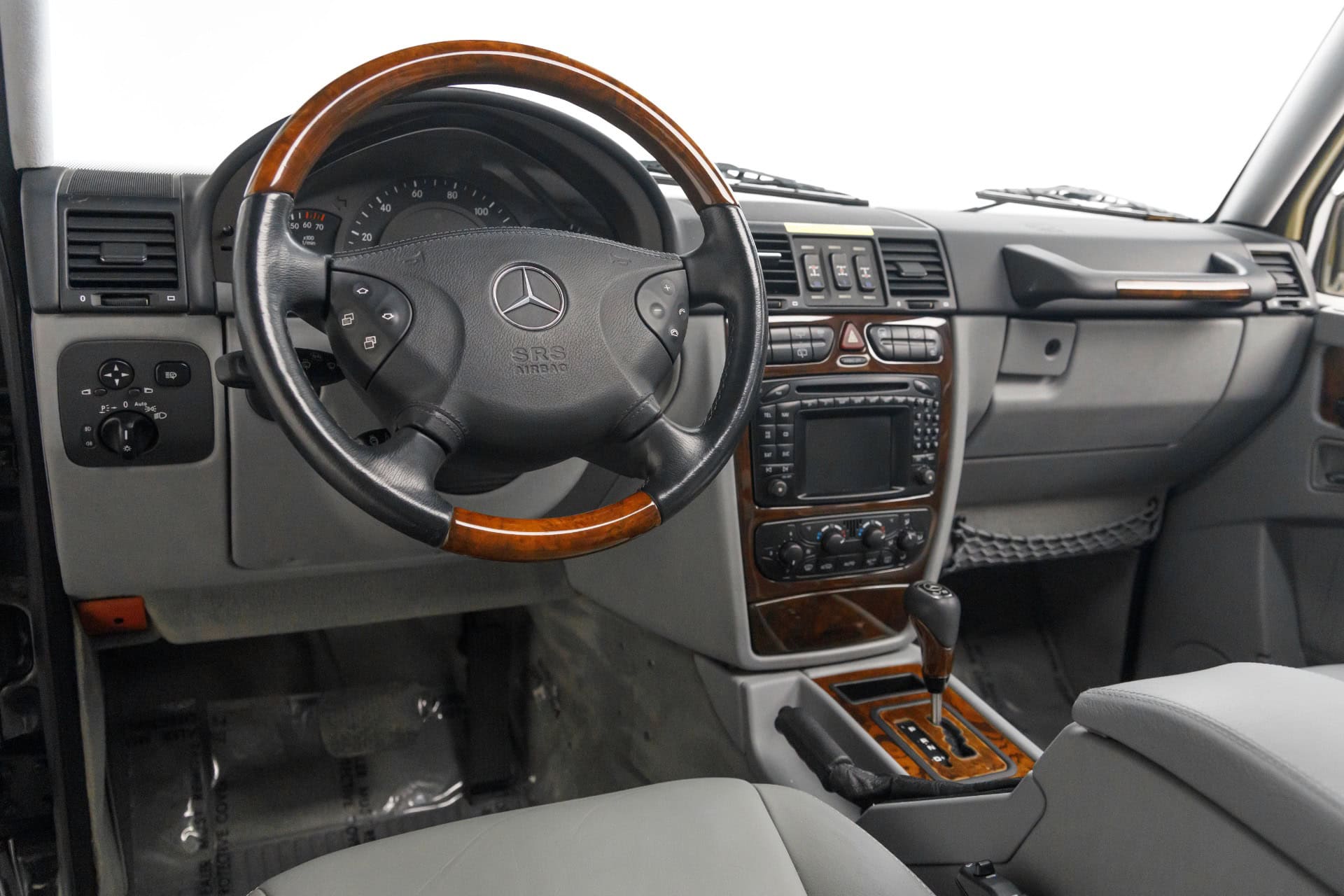
In 1990, the W463 arrived, and with it the G-Wagon became a different kind of vehicle. Where the W460 had been utilitarian, the W463 was positioned as a luxury model on par with the S-Class and the Range Rover. Little from the W460 interior carried over. The new cabin featured leather upholstery, power windows, wood trim on the centre stack, and a dashboard architecture borrowed from the contemporary E-Class. The exterior received a body-coloured front end, wider wheel arch trims, and revised lighting, all while keeping the boxy silhouette, exposed door hinges, and rear-mounted spare that had defined the original.
The off-road architecture remained entirely intact. Three locking differentials, a low-range transfer case, solid front and rear axles, ladder-frame chassis. What changed was everything around it.
The W461, which continued in parallel from 1990 onward, kept the spartan character of the original for military and government use. The two lines split the G-Wagon into what it had always been and what it was now becoming.
The G500 Arrives
The W463 launched in Europe with four and six-cylinder engines. The first V8 came in 1993 in the form of the limited 500GE — just 446 examples, hand-built by AMG, never officially sold in the US. The full production V8 that would define the model came five years later.
In May 1998, Mercedes introduced the G500 as a full production model, powered by the M113 V8 — a 5.0-liter naturally aspirated engine producing 292 horsepower and 336 lb-ft of torque. It was the same engine family appearing across the S-Class, SL, and ML at the time, a deliberate signal that the G-Wagon was now drawing from the same parts bin as Mercedes-Benz's most refined vehicles.
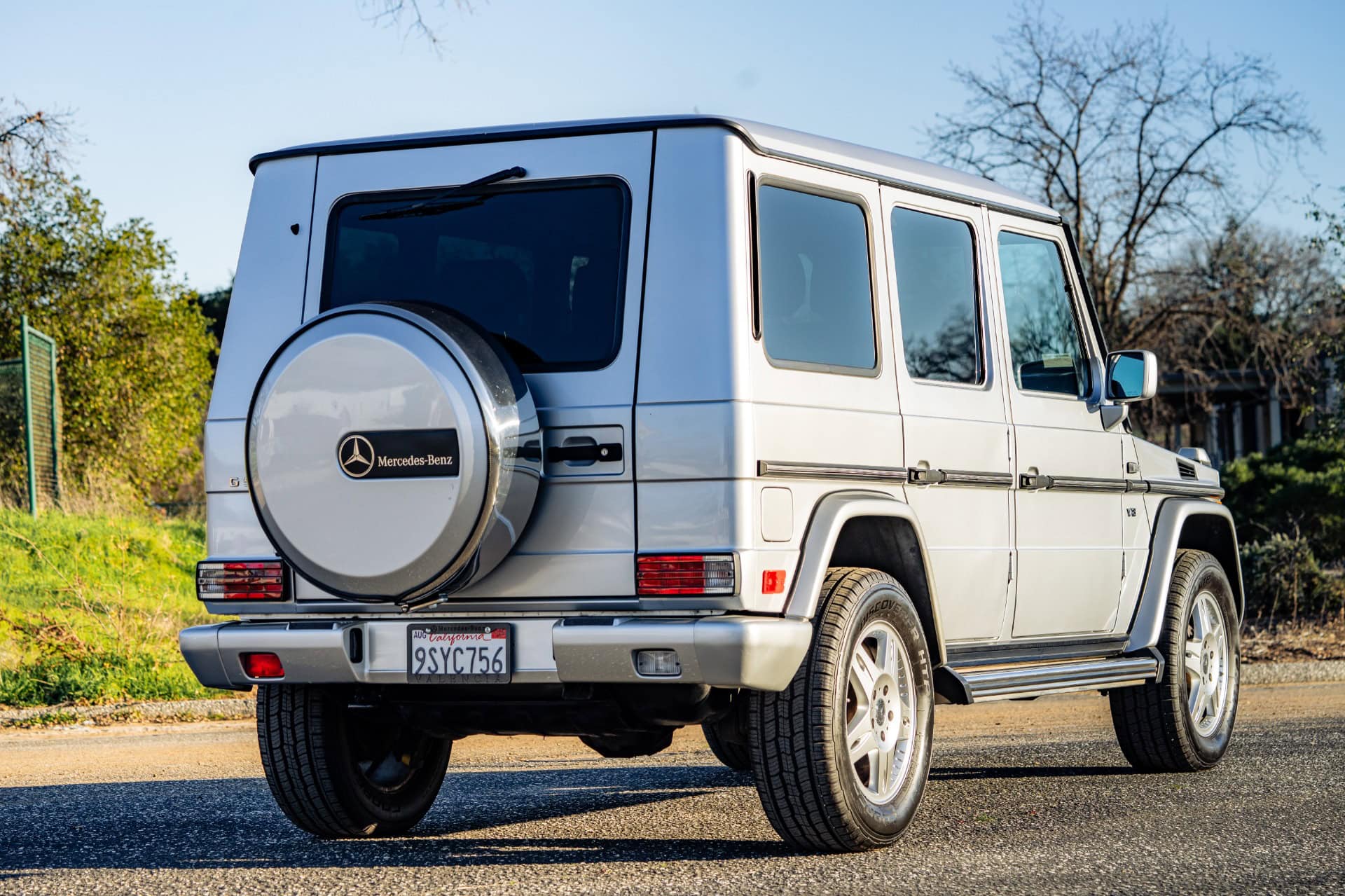
The M113 was well-chosen for the application. It was smooth, linear, and built for longevity rather than outright performance, which suited a vehicle that weighed over 5,000 lbs. Power delivery was predictable and confidence-inspiring, and the engine earned a strong reputation for durability at the time.
For those who wanted more, AMG offered the G55, unveiled in July 1999 to mark the G-Wagon's 20th anniversary, first with a naturally aspirated 5.5-liter V8 and later, from 2004, with a supercharged version producing 476 horsepower, raised to 500 horsepower by 2007. But the G500 remained the core of the range — the version that made the most sense for most buyers.
In 2002, Mercedes officially brought the G-Class to the United States for the first time, with the G500 as the entry point. It landed in a market that had no reference point for it, and promptly became one of the most coveted vehicles in the country.
In 2008, the G500 received a significant update. The M113 gave way to the M273, a 5.5-liter V8 producing 388 horsepower, identified externally by a revised three-slat grille. The same year brought bi-xenon headlights and a revised interior. For the 2009 model year, the G500 was renamed the G550 in North America, though the mechanical specification remained the same.
For a select group of buyers, Mercedes went further. Between 1999 and 2013, the company produced the G500 Cabriolet — a limited-run, open-top version of the W463 built on the same V8 platform. It remains one of the rarest and most collectible G-Class variants ever made, combining the full luxury specification of the G500 with a factory soft top and two-door body. If the standard G500 cemented the G-Wagon as a luxury icon, the Cabriolet took that a step further — a vehicle designed as much to be experienced as to be driven.
Why the G500 Became a Cultural Object
By the early 2000s, the G500 had developed a following that extended well beyond the off-road community. The combination of presence, capability, and relative rarity made it a vehicle people wanted to be seen in, and Mercedes leaned into that positioning progressively over the following decade.
The boxy silhouette that had been a practical consequence of the original design brief became a defining aesthetic. The exposed door hinges, the external spare, the flat glass, the upright windscreen, none of these features were styling choices. They were engineering decisions that happened to produce a visual identity that has aged extraordinarily well. While most of the automotive industry spent the following decades softening lines, the G-Wagon remained exactly what it always was.
The G500, as the most accessible V8 variant, became the benchmark version for collectors and enthusiasts who wanted the full G-Wagon experience without the complexity of the AMG models.
The G500 as a Foundation for Something Different
Where things get interesting is when you look at the W463 G500 not as an endpoint, but as a starting point. For those who discovered the vintage G-Wagon through the W460 series, the more utilitarian generation of the platform, the W463 is a natural point of reference. The two generations share the same fundamental DNA: the same ladder frame, the same off-road architecture, the same belief that a vehicle should be built to last decades rather than model cycles.
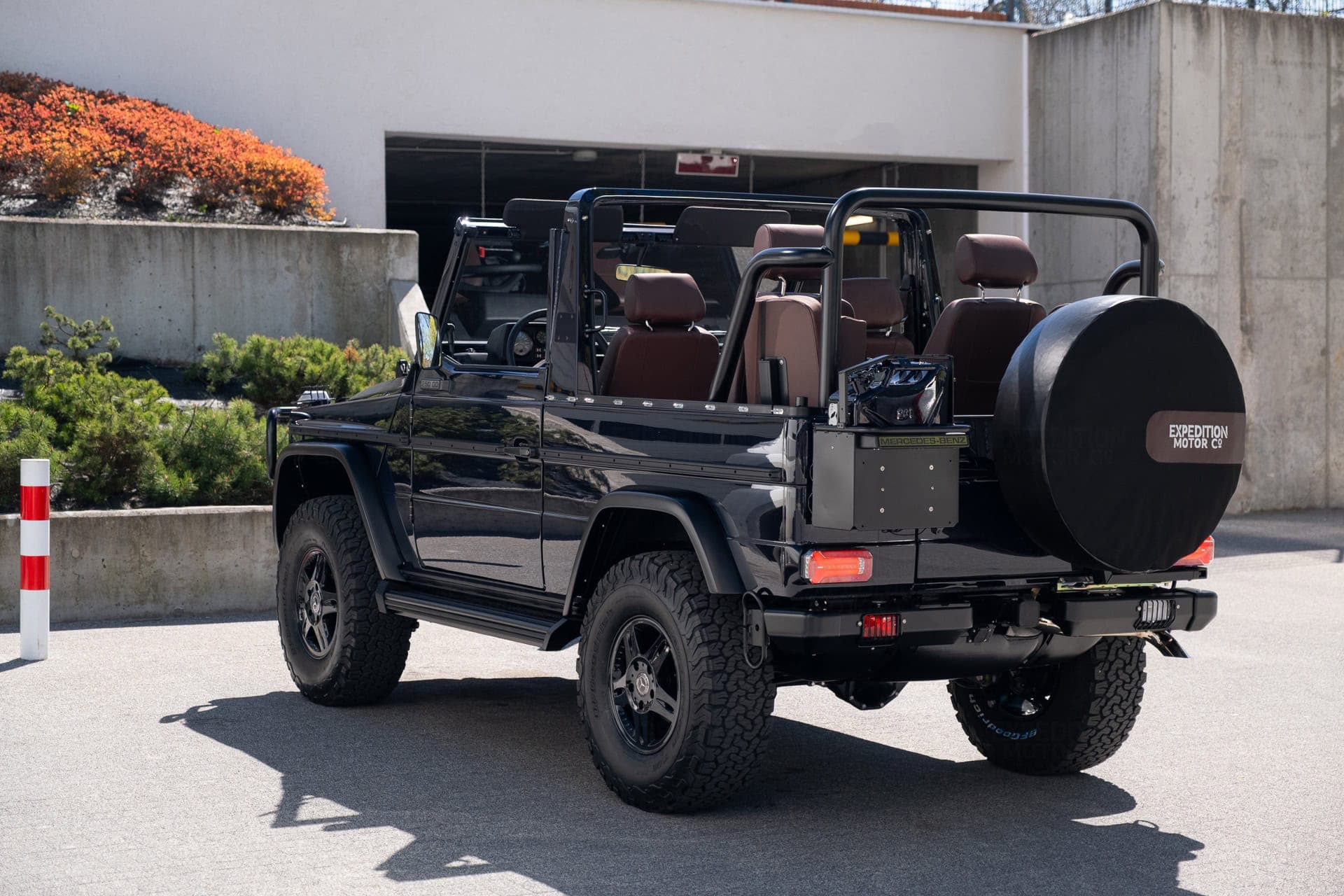
At Expedition Motor Company, our work begins where the G-Wagon's story does. The W461 Wolf platform, with its two-door cabriolet body, fold-down windshield, and analog mechanical character, represents the G-Wagon in its original form before luxury appointments reshaped the truck. These are the vehicles we preserve and re-engineer, taking each one back to bare metal and rebuilding it from the ground up with the technology, comfort, and performance demanded by today's roads.
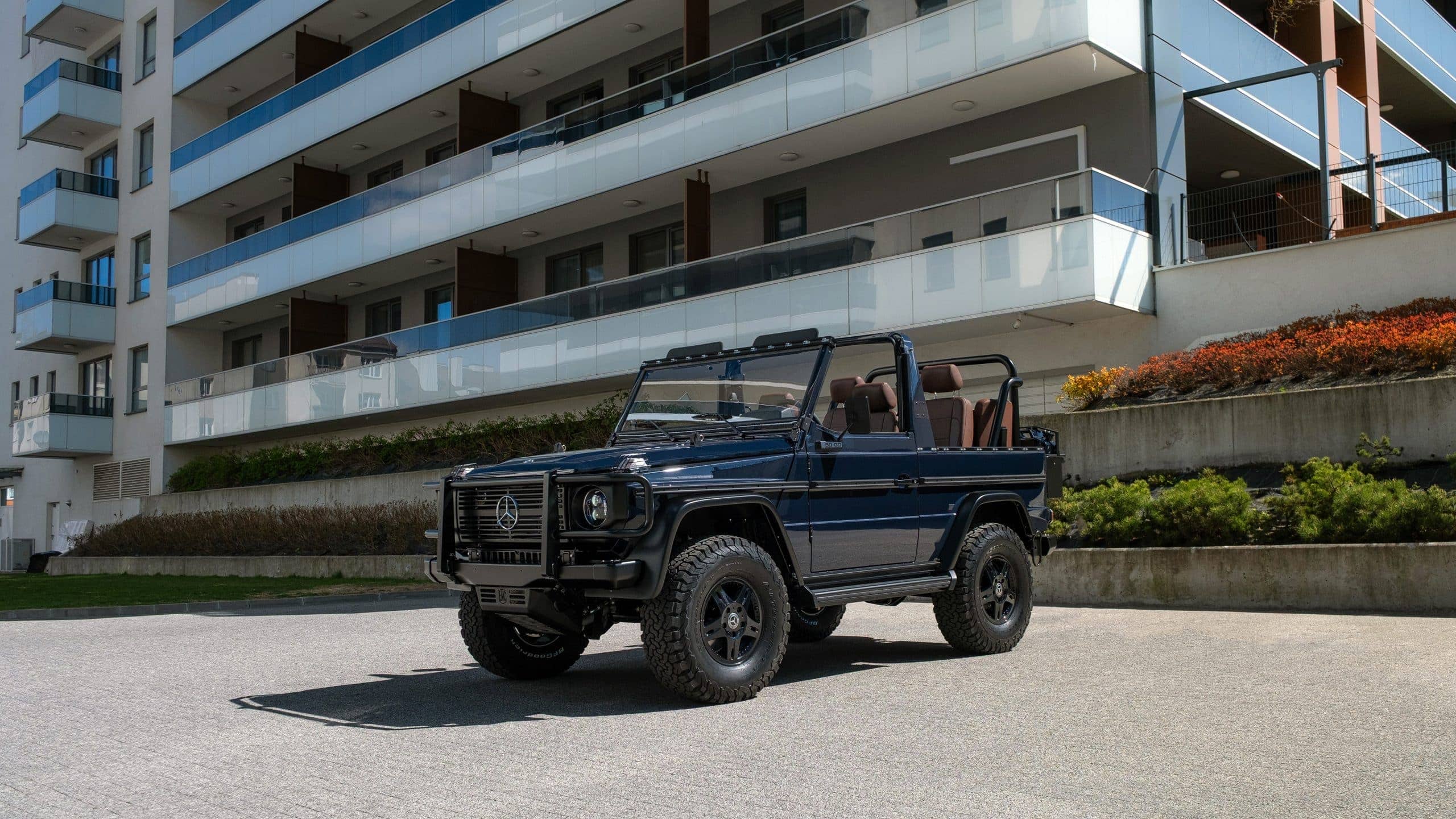
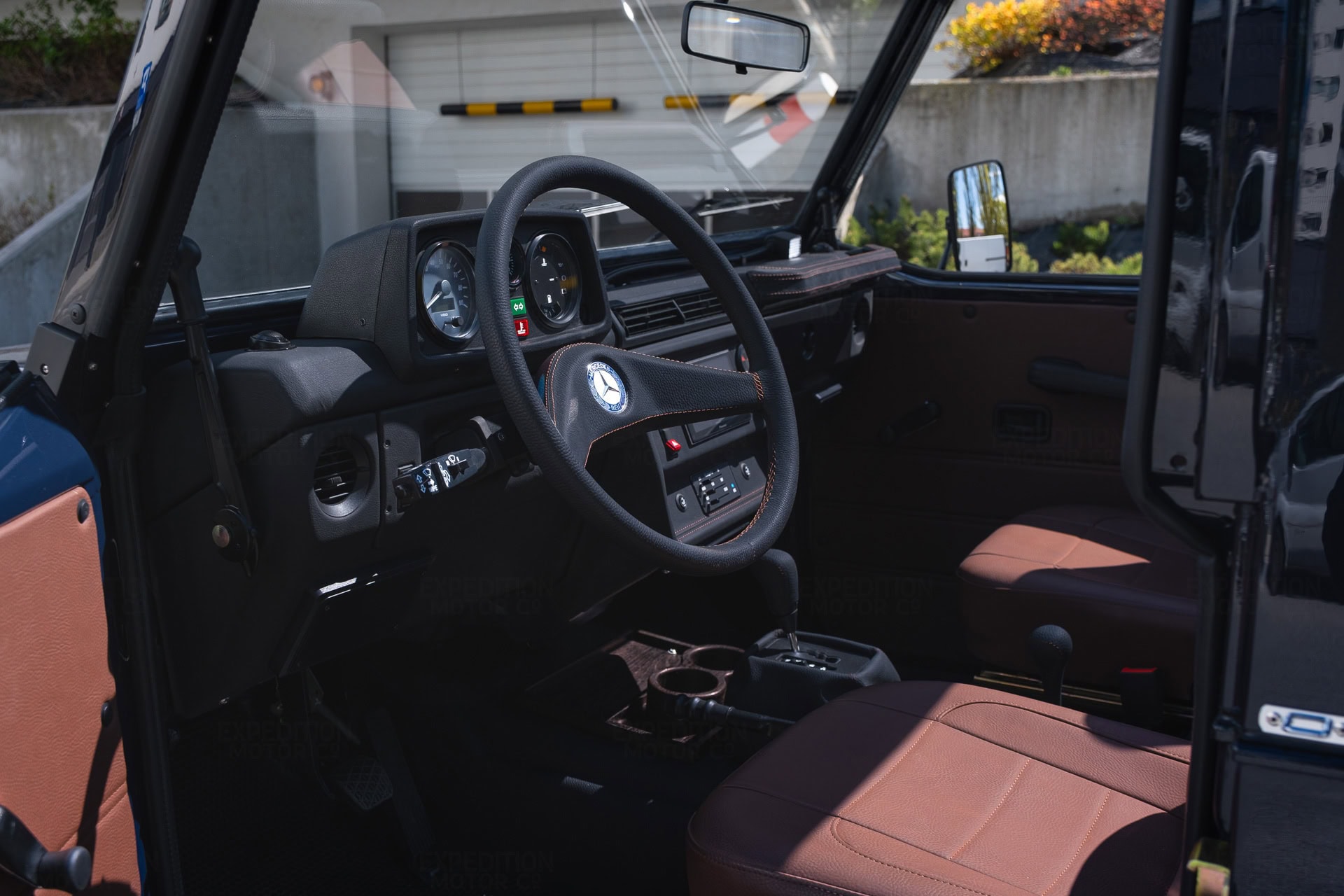
The result is a G-Wagon genuinely rooted in the history of the platform, with the presence of a classic, re-engineered to live and perform on a daily basis. The powertrain options we offer reflect that same thinking. The OM605/ OM606 turbodiesel preserves the diesel character the platform was born with, re-engineered for modern reliability and performance. The 430hp LS3 V8 is also available for clients who prefer a brand-new crate engine over a restored one. Either way, the philosophy is similar to the G500: the right powertrain for the right driver, appointed with features for comfort and luxury.
Specifications Overview
Mercedes-Benz G500 (W463, M113, 1998-2008)
Engine: 5.0-litre M113 V8, naturally aspirated Power: 292 hp at 5,500 rpm Torque: 336 lb-ft at 2,700–4,000 rpm Transmission: 5-speed automatic Drivetrain: Permanent four-wheel drive, three locking differentials Suspension: Solid front and rear axles, coil springs Construction: Steel ladder-frame chassis, body-on-frame Kerb weight: Approximately 2,400 kg
Mercedes-Benz G500 (W463, M273, 2008-2018)
Engine: 5.5-litre M273 V8, naturally aspirated Power: 388 hp Transmission: 7-speed automatic North American designation: G550 (from 2009)
Collecting and Restoring the G500
Particular W463 G500s have appreciated significantly over the past decade, particularly in desirable specifications and colors. The market for fully-restored examples has however has remained small as production numbers were extremely high and ample low-mile vehicles are readily available.
For those drawn to the G500 but interested in a more bespoke outcome, the wider G-Wagon ecosystem offers compelling alternatives. Those researching the W463 often find themselves looking at the older short-wheelbase variants, particularly the Wolf, which has developed its own collector following among buyers who want something rarer and more specific than the mainstream G500. If you are looking for a classic g wagon for sale in that category, the supply of quality examples is limited, and lead times for bespoke builds reflect that.
The G500 earned its reputation honestly. It was not designed to be desirable, it was designed to be exceptional, and the market eventually caught up with what that meant.
Expedition Motor Company restores bespoke open-top G-Wagons on the W461 Wolf platform, commissioned to each client's specification. View completed builds or spec your own on the Wolf Builder configurator here.