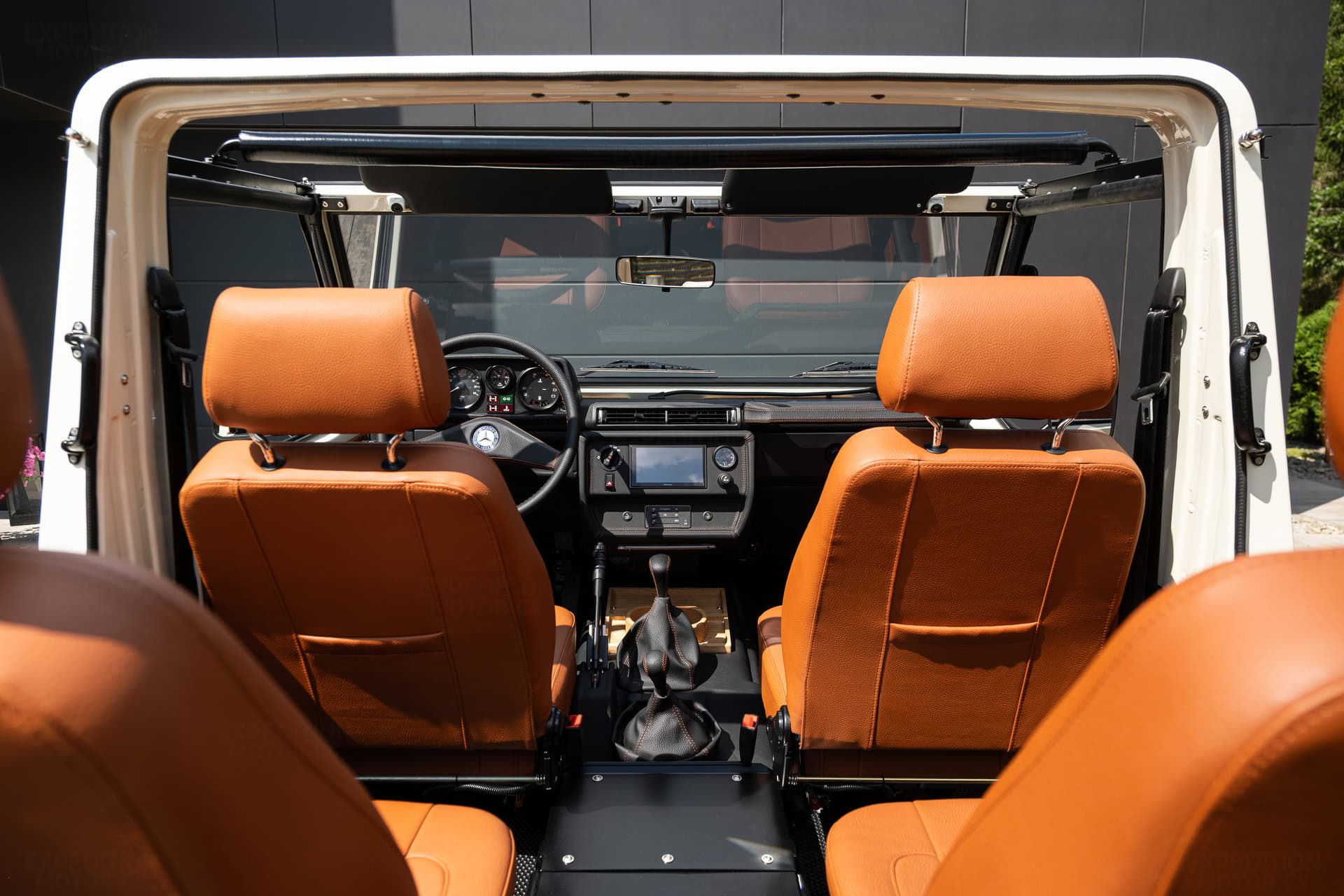
The W460 G Wagon: Background, Engineering, and Legacy
Photo Credits: Mercedes-Benz Archive
The W460 G Wagon is the first production generation of the Mercedes-Benz G-Class, built from 1979 to 1991 and assembled in Graz, Austria. Conceived as a body-on-frame 4×4 for government, military, and utility work, it established the core template—ladder-frame construction, solid axles, and locking differentials—that later G-Class variants would keep while adding comfort and electronics. Early sales included both Mercedes-Benz and Puch-badged versions for specific markets, with Puch models being equipped with different components. Its long service life and broad global footprint made the W460 the technical and historical foundation for everything that followed in the G-Class line.
Origins and Purpose
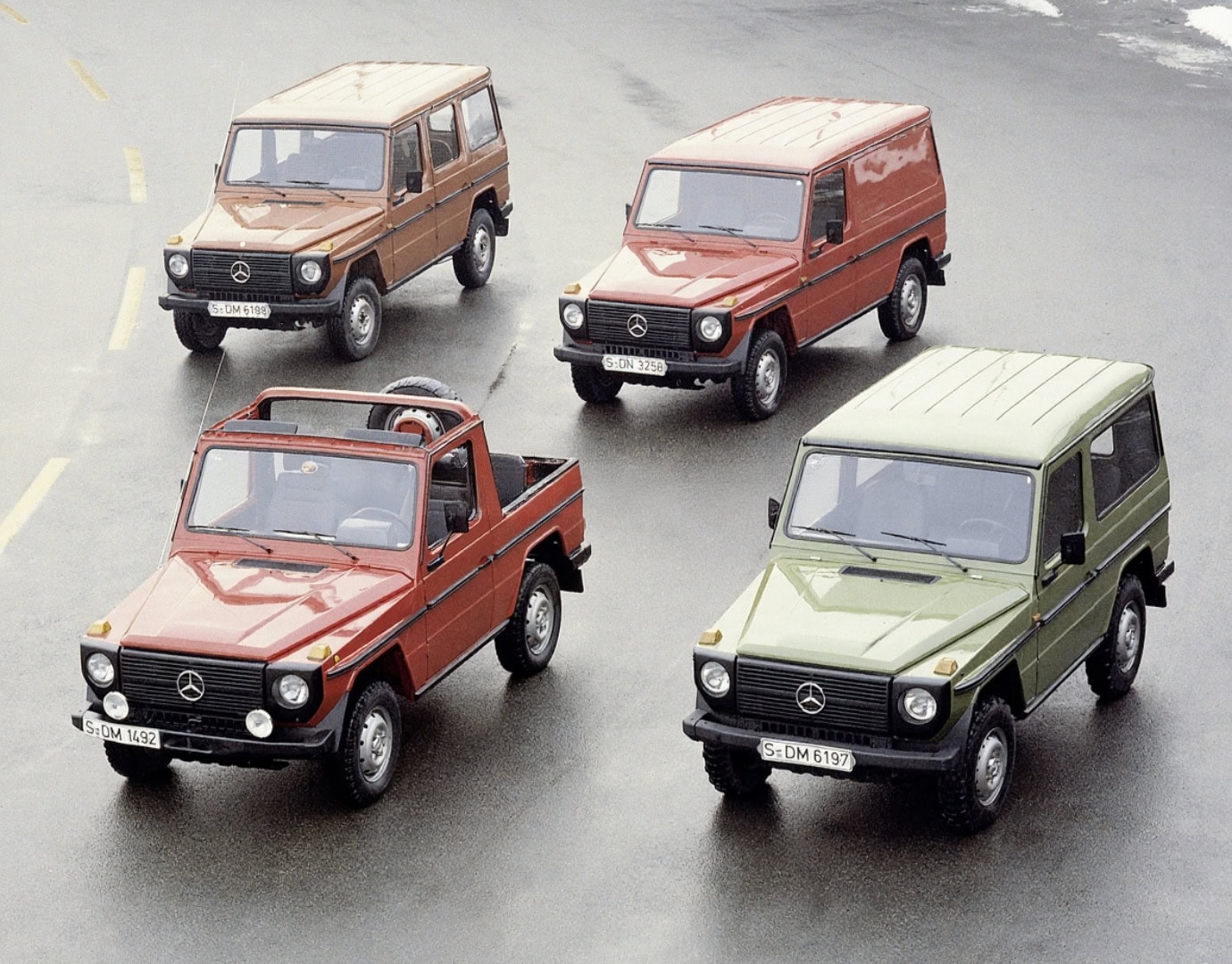
Photo Credits: Mercedes-Benz Archive
Mercedes-Benz unveiled the G-model in 1979 after years of development and severe-climate testing, positioning it as a cross-country vehicle for public authorities and civilian utility use. The W460 launched with multiple body styles, a short wheelbase cabriolet, short wheelbase wagon, long wheelbase wagon, and cab-chassis pickup–allowing operators to tailor payload and configuration to specific roles. Notably, the first generation used a ladder frame with coil-sprung solid axles and selectable differential locks, a robust layout suited to low-speed traction, durability, and ease of field service. Mercedes did not officially import the W460 to the United States in period; most U.S. examples arrived via gray-market channels.
Engineering Characteristics
Across its lifecycle, the W460 offered a range of gasoline and diesel engines, including the M102/M110 petrol units and OM616/OM617/OM602 diesels, paired to 4 or 5-speed manuals and a 4-speed automatic. The chassis emphasized torsional rigidity and serviceability, with straightforward access to major mechanicals and interior fittings designed to tolerate heavy use. Production remained centered in Graz under Steyr-Daimler-Puch, a partnership that has continued building the Mercedes G-Class to the present day. The engineering brief was consistent—keep the structure simple, maintain clear sightlines, and prioritize functionality over cosmetics—an approach that allowed the W460 to serve reliably in extreme environments for decades.
Notable W460 Models
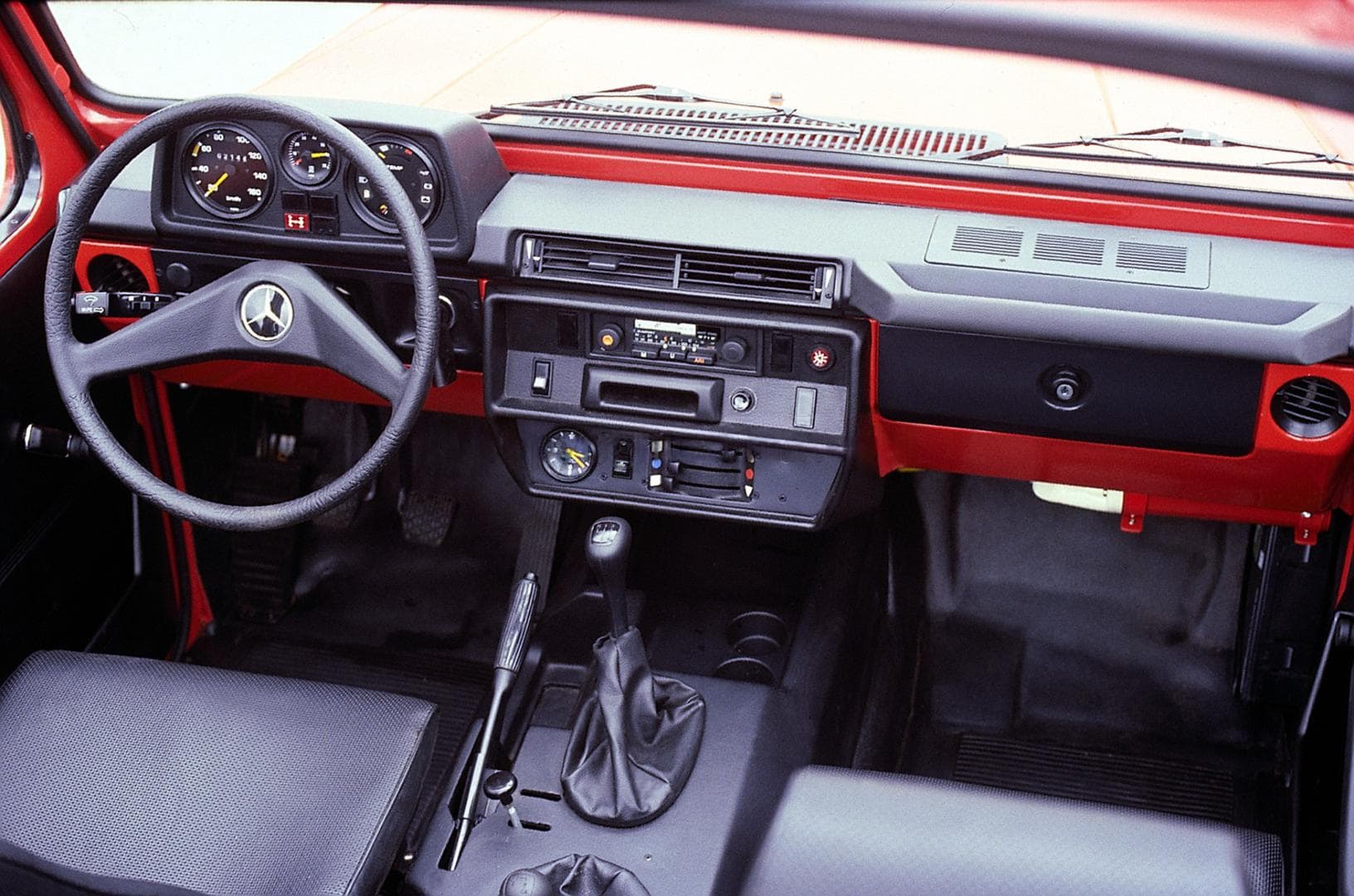
230 G / 230 GE: Gasoline four-cylinder variants; the 230 GE introduced fuel injection for improved drivability in civilian roles.
240 GD / 300 GD: Diesel five-cylinder workhorses favored for longevity and low-rpm torque in utility fleets.
280 GE: Inline-six petrol option delivering higher road performance for mixed-use applications.
These and other W460 specifications varied by market and year; the lineup’s breadth reflected the platform’s use as both a government tool and a civilian 4×4.
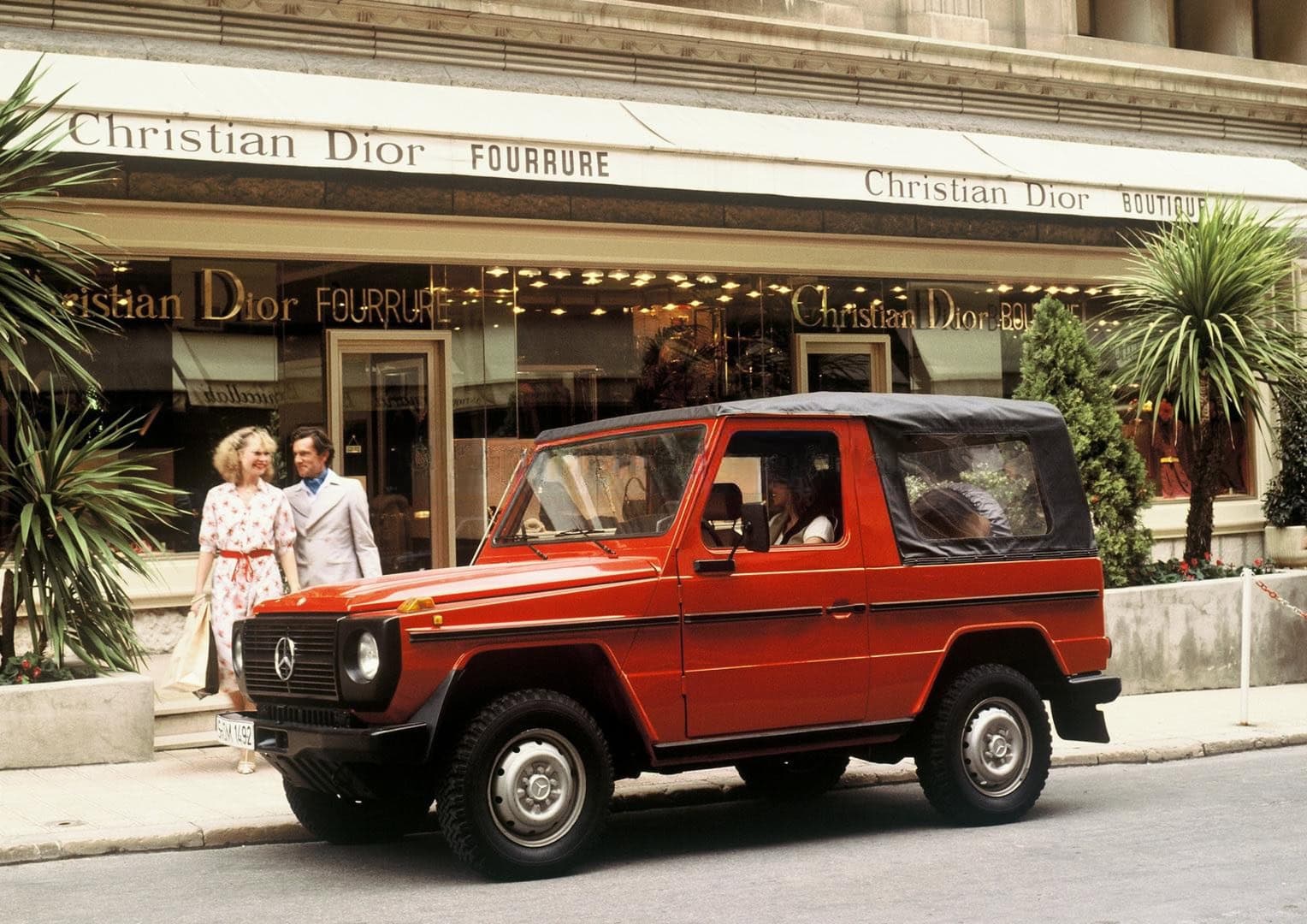
Photo Credits: Mercedes-Benz Archive
From W460 to W461—and Why It Matters
When the more luxurious W463 arrived around 1990, the duty-focused W460 evolved into the W461, which retained the utilitarian body and chassis concept while adopting updated powertrains and, for many applications, a 24-volt electrical architecture. The W461 targeted military, government, and NGO users, and within that family the 250GD Wolf became one of the most recognizable diesel variants for field operations. The continuity between W460 and W461—frame layout, axles, and mission profile—explains why restorers and operators still view them as closely related generations optimized for durability and straightforward maintenance.
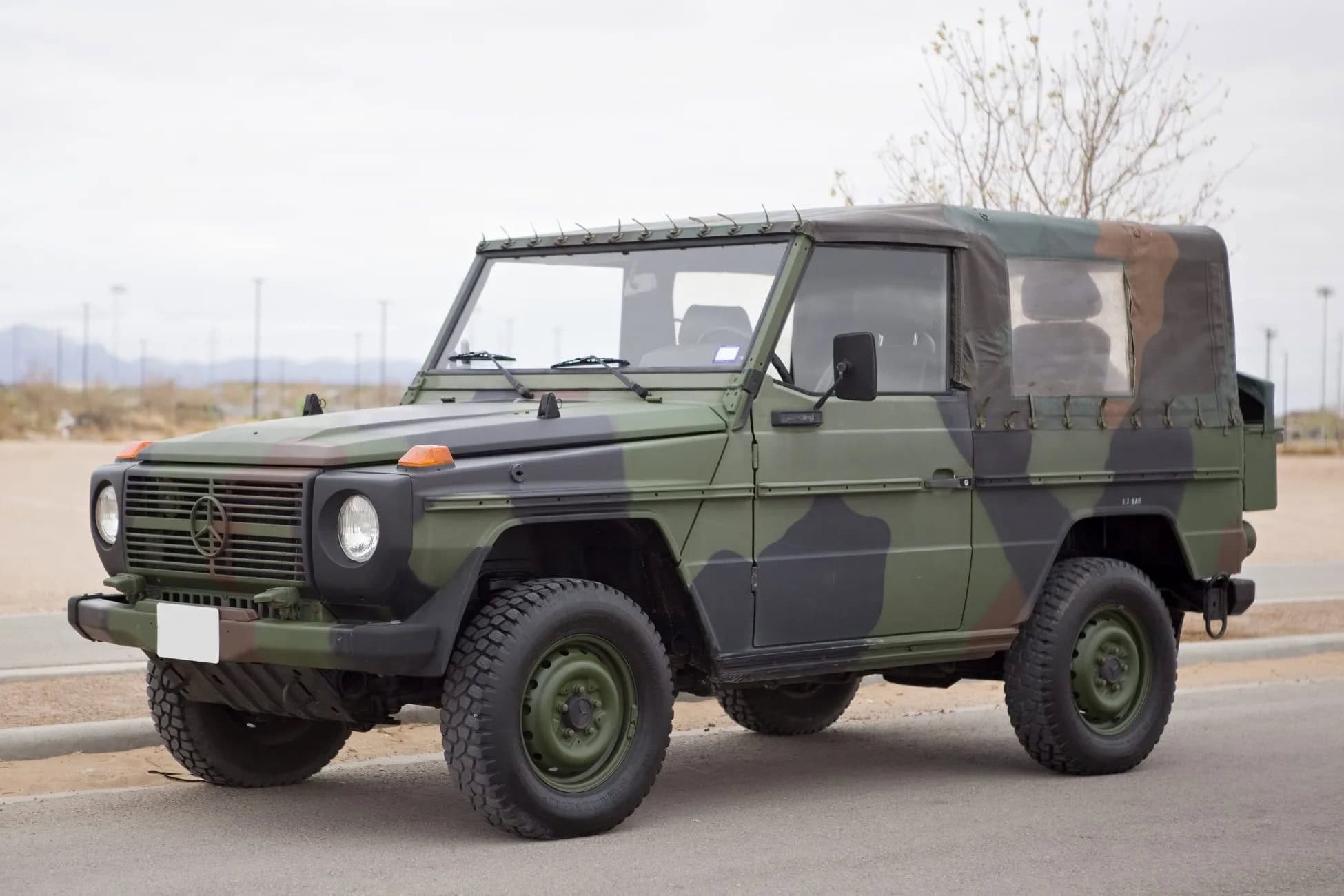
Photo Credits: Bring a Trailer
At Expedition Motor Company, this lineage informs frame-off restorations of the W461-era 250GD military Gelandewagen. Projects are disassembled to bare metal and rebuilt in-house with careful attention to the original geometry and hardware, then equipped with focused updates—engine options appropriate to the platform, improved braking, and proprietary suspension—so the vintage SUV remains faithful to its roots while meeting modern expectations for drivability. In practical terms, the W460 established the architecture and use case; the W461 refined it for official-duty service; and thoughtful restorations carry that engineering into the present.
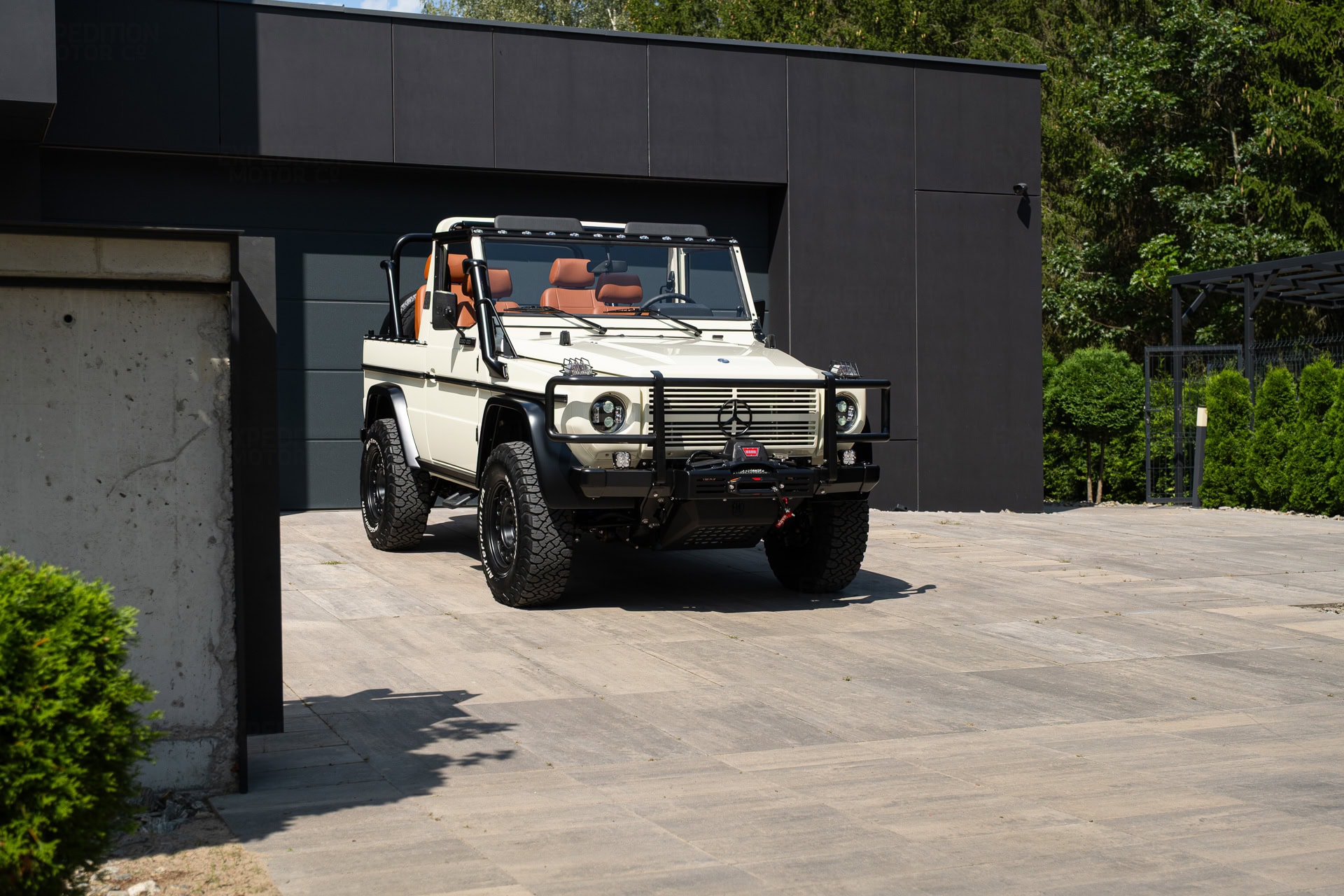
To discover EMC's vintage Mercedes convertibles for sale or to design your own custom G Wagon, head to their website.